
Total Hip Replacement (V-arthroplasty & Prime Hip)
Total Hip Replacement (THR) for Dogs at MaxPetZ: Restoring Mobility and ComfortFor Pet Owners: Helping Your Dog Live a Pain-Free LifeIntroduction to Total Hip Replacement (THR)Tot...
Bone & Joint Surgery
Advanced Surgical Care
Procedure Overview
Total Hip Replacement (THR) for Dogs at MaxPetZ: Restoring Mobility and Comfort
For Pet Owners: Helping Your Dog Live a Pain-Free Life
Introduction to Total Hip Replacement (THR)
Total Hip Replacement (THR) is an advanced surgical procedure designed to relieve pain and restore normal function in dogs suffering from severe hip conditions. Think of it as replacing a worn-out, painful hip joint with a durable, artificial one. At MaxPetZ, our goal is to enhance your dog's quality of life, allowing them to enjoy an active, pain-free lifestyle. This procedure is recommended when other treatments haven't provided lasting relief, and it significantly improves comfort and mobility by giving your pet a pain-free joint with normal biomechanics.
Common Conditions Treated by THR
THR is highly effective for various painful hip conditions that limit your dog's movement and happiness. These include:
• Hip dysplasia in large breeds: A genetic condition where the hip joint doesn't form correctly.
• Chronic or recurrent hip luxation: When the hip joint repeatedly dislocates.
• Post-traumatic arthrosis: Arthritis that develops after an injury to the hip.
• End-stage osteoarthritis: Severe "wear-and-tear" arthritis in the hip joint.
• Avascular necrosis (Legg-Calvé-Perthes disease): A condition affecting small breeds where the blood supply to the top of the thigh bone is disrupted.
• Failed femoral head ostectomy (FHO): If a previous FHO surgery did not provide satisfactory results.
Key Benefits for Your Pet
Choosing THR for your dog offers numerous advantages, focusing on a return to a happy, active life:
• Significant Pain Relief: THR aims to provide a pain-free joint, dramatically improving your dog's comfort.
• Restored Mobility and Function: The procedure restores normal biomechanics and encourages normal limb use and gait patterns, allowing your dog to walk, run, and play without limitations.
• Improved Quality of Life: Over 92% of owners report an improved quality of life for their dogs 6–12 months post-surgery.
• High Success Rates: MaxPetZ clinical data shows a 96.1% implant survival rate, with most dogs enjoying an active, pain-free lifestyle.
• Predictable Outcomes: Unlike other procedures like FHO, THR offers highly predictable and favorable results, especially for older or larger dogs with severe degenerative disease.
What Owners Should Expect
The journey to a healthier hip for your dog involves several stages:
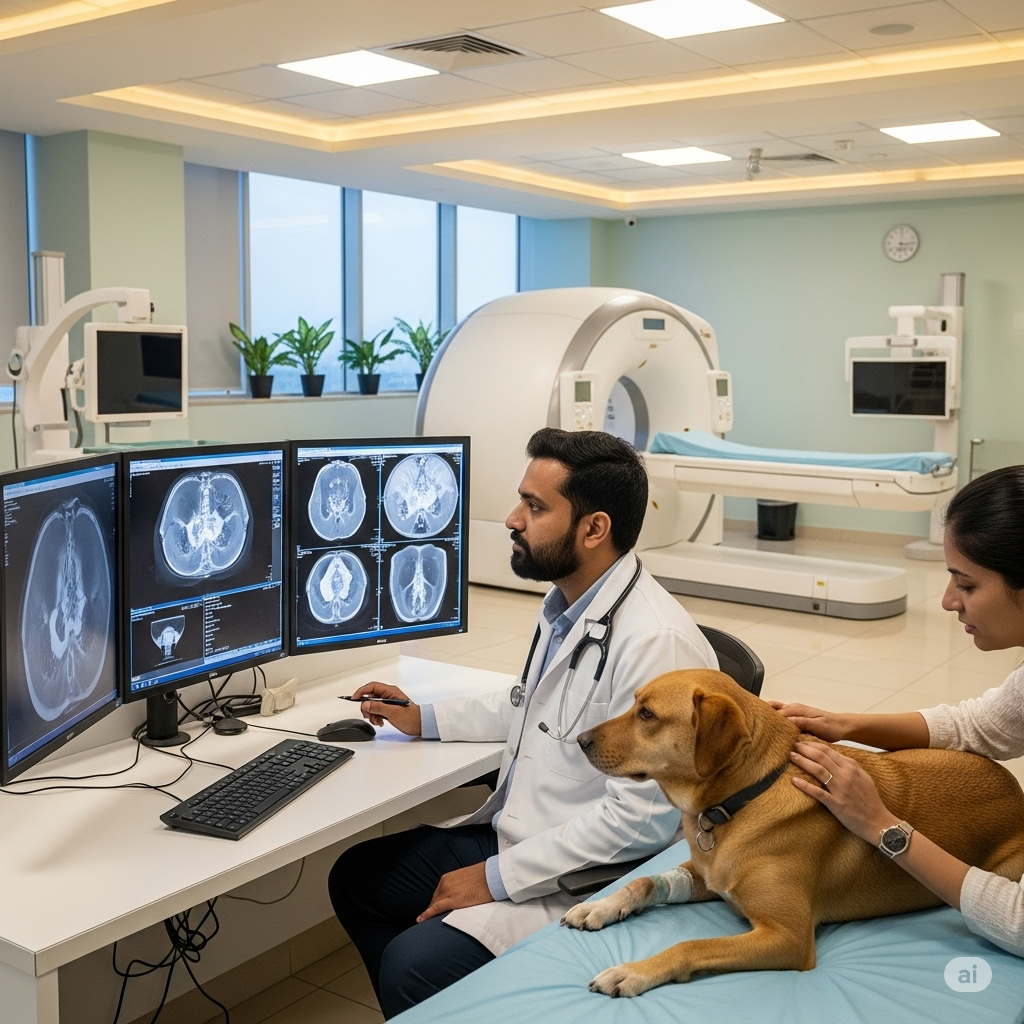
1. Comprehensive Evaluation: Your veterinarian will thoroughly assess your dog's gait, posture, pain levels, and joint stability. This includes detailed X-rays (radiographs) and possibly biomechanical analysis to determine if THR is the best option. Blood tests will also be performed to ensure your dog is healthy enough for surgery.
2. The Procedure: Your dog will undergo general anesthesia. Our expert veterinary surgeons will then perform the Total Hip Replacement using advanced implant systems like the Prime Hip, which is designed for excellent stability and adaptability. The surgery typically takes about 95 minutes.
3. Hospital Stay: Your dog will typically stay with us for a few days (e.g., 3-4 days like Simba, our Golden Retriever patient) for close monitoring, pain management, and to begin initial recovery.
4. Discharge and Home Care: Upon discharge, you'll receive detailed instructions for medication and home care. This includes specific activity restrictions and an initial rehabilitation plan.
Recovery & Aftercare: Your Role in Success
Your commitment to post-operative care is crucial for a successful outcome. The recovery process is structured in phases:
• Immediate Postoperative (0–14 Days): Strict confinement to a crate or small room with non-slip flooring. Only brief, lead-supported walks for basic needs. Daily incision monitoring and pain management are vital. Gentle passive exercises may be initiated under supervision.
• Controlled Recovery (2–8 Weeks): Gradually increase supervised lead walks, focusing on even weight-bearing. Hydrotherapy (swimming) may be introduced after the incision heals. Carpeted stairs might be permitted around six weeks. High-impact activities should still be avoided.
• Advanced Functional Recovery (8–12 Weeks): Introduce controlled off-leash activity and simple agility tasks. Strengthening exercises will be implemented, and a radiographic follow-up typically occurs around ten weeks.
• Long-Term Return to Normal Function (>12 Weeks): Most dogs can resume unrestricted activity by 12–14 weeks, though working or sporting animals may require a longer ramp-up. It's important to continue avoiding repetitive high-impact actions.
• Ongoing Monitoring: Regular follow-up visits with radiographs and clinical evaluations will assess implant stability and function.
Reassurance About Outcomes
At MaxPetZ, we pride ourselves on exceptional outcomes for THR. With proper rehabilitation and lifelong joint care, the prognosis for significant improvement in mobility and pain reduction is excellent. Our use of advanced systems like the Prime Hip, combined with expert surgical techniques and comprehensive post-operative support, ensures the best possible results for your beloved pet.
Frequently Asked Questions (FAQ)
1. What is the difference between THR and FHO? Total Hip Replacement (THR) replaces the entire hip joint with an artificial one, restoring normal biomechanics and providing predictable, significant pain relief. Femoral Head Ostectomy (FHO) involves removing the "ball" portion of the hip joint, creating a "false joint." While it reduces bone-on-bone rubbing, it does not restore biomechanical function, and pain relief is often unpredictable, with common side effects like limb shortening and muscle wasting. MaxPetZ generally recommends THR over FHO due to superior outcomes.
2. How long does the recovery process take after THR? Rehabilitation is a structured process. Most dogs can return to unrestricted activity by 12–14 weeks post-surgery, though a full return to peak activity for working or sporting dogs might take longer. Adherence to the rehabilitation protocol is crucial.
3. Will my dog be completely pain-free? The primary goal of THR is to provide a pain-free joint and significantly reduce or eliminate chronic pain. Over 92% of owners report improved quality of life due to pain reduction.
4. Are there any risks associated with THR? While advancements have reduced complications, inherent risks exist. MaxPetZ clinical data shows low rates of dislocation (2.8%), infection (1.3%), and implant loosening (1.3%). Our team takes every precaution to minimize these risks.
5. How long do hip implants last? Implant survival of over 5 years is considered a measure of success. Canine data often spans 3–8 years, influenced by breed-specific longevity. With proper care and monitoring, many implants last for the dog's lifetime.
6. Can older or larger dogs undergo THR? Yes, older or larger dogs with severe degenerative hip disease are expected to have much more favorable results with THR compared to FHO. Careful pre-operative assessment ensures candidacy.
7. What if I cannot afford THR? Financial constraints can be a concern. While THR offers superior outcomes, FHO is sometimes considered as a salvage procedure when THR is not an option, often due to financial limitations. We encourage discussing all options with your surgeon to make an informed decision.
📖 For Vets & Detailed Cases:
Read our in-depth procedure about Total Hip Replacement (THR) a veterinary guide →
Case Study: Total Hip Replacement for Severe Hip Dysplasia in a Golden Retriever →