
Surgical Management of an Iliac Wing Fracture in a Canine Patient
A detailed look into a successful treatment at MaxPetZ.
Signalment and History
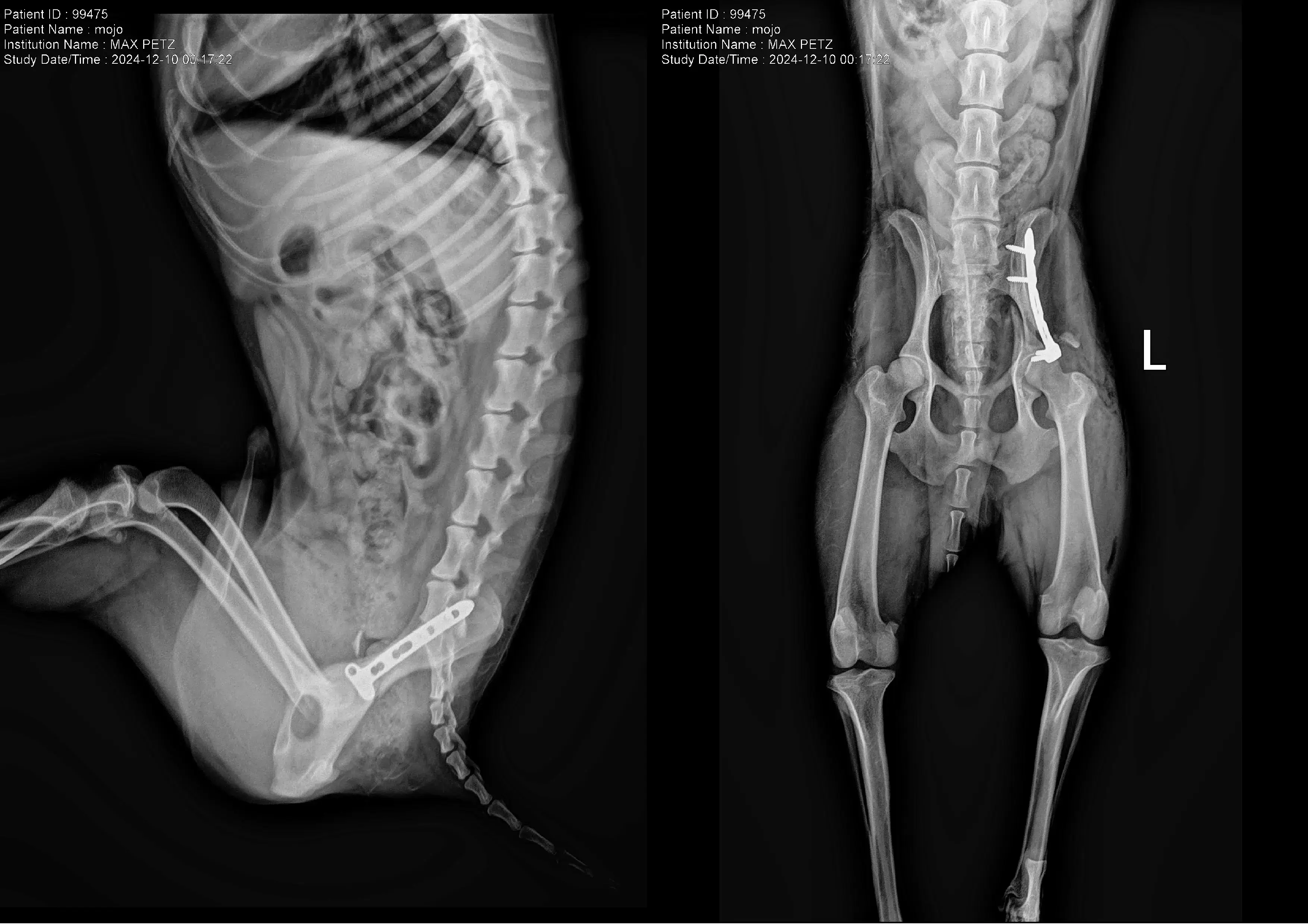
Mojo, a 3-year-old male Goldendoodle weighing 6.2 kg, presented with traumatic injury to the ileum/iliac wing. The initial presentation led to imaging and subsequent surgical planning for stabilization.
Preoperative Assessment & Diagnostics
Preoperative diagnostics included orthogonal radiographs (requisitions noted on 9–25 Jan and 11 Dec 2024), CBC, LFT and KFT panels, ECG, and FAST scans as required. Key lab findings during the perioperative period included elevations in hepatic enzymes (marked AST/ALT on 11 Dec 2024) that were monitored and managed. CBCs and KFTs were otherwise acceptable for anesthesia.
"MRI + CT + 3D planning for safer surgery."
Surgical Procedure (Iliac Wing Fracture Repair)
On 10 Dec 2024, Mojo underwent open reduction and internal fixation of an iliac wing fracture. The patient was induced with ketamine + midazolam (with premedication including acepromazine + fentanyl in some records), maintained on isoflurane, and monitored closely throughout. The surgical approach included a midline incision over the iliac wing, exposure of the fracture site, anatomical reduction and application of a T-plate for bridge plating and stabilization of the iliac wing fracture. Hemostasis was achieved and routine layered closure performed; skin closed with non-absorbable sutures. Estimated blood loss was minimal.
Immediate Postoperative Care
Postoperative management included IV fluid therapy and injectable medications (CT, amikacin, meloxicam, Rantac, NBF/DNS as indicated). The patient was monitored for urinary and fecal output, appetite and ambulation; weight-bearing on the affected limb was noted postoperatively. Wound care (ASD twice daily, Betadine, Staphban ointment) and strict E-collar application were advised. Analgesics, antibiotics and supportive medications were prescribed with plans for transition to oral drugs after 2–3 days.
Implant Management & Implant Removal
Implants were removed on 13 Feb 2025 under regional block and general anesthesia; implants were excised through a single incision and the wound closed with PDS and monocryl using intradermal sutures (suture type chosen so removal was not required). Post-implant removal instructions included short course oral medications and E-collar for 2 weeks. Follow-up wound check in Gurugram clinic with Dr. Kanika was advised.
Follow-Up & Recovery
Postoperative records indicate smooth recovery from anesthesia, ability to ambulate and weight-bearing, progressive improvement, and successful implant removal. Wounds healed with routine dressing changes and suture line care. Oral medications and supplements were prescribed during recovery periods as listed in the notes.
Discussion
Iliac wing fractures in small-breed dogs are best managed by anatomical reduction and stable fixation to restore pelvic symmetry and prevent chronic pain or gait abnormality. Bridge plating with a T-plate provides stability for iliac wing fragments; close perioperative monitoring of hepatic enzymes and supportive care are important when LFT abnormalities are present.
Conclusion
This case demonstrates successful surgical repair of an iliac wing fracture in a small-breed patient using bridge plating (T-plate) with uneventful recovery and implant removal, resulting in good functional outcome.
Treatment Timeline
25 Jan 2025 (x-ray requisition 384540) & earlier imaging
Initial Presentation / Diagnostics
Initial radiographs obtained for suspected pelvic/iliac injury; plan for surgical stabilization discussed.
11 Dec 2024 – 13 Feb 2025 (serial labs & imaging)
Pre-op Workup
CBC, LFT, KFT, ECG, AFAST/TFAST and repeat radiographs performed to assess fitness for anesthesia and plan surgery. Noted elevated hepatic enzymes on 11 Dec 2024; monitored and addressed perioperatively.
10 Dec 2024
Iliac Wing Fracture Repair (Surgery)
Open reduction and internal fixation of iliac wing fracture with T-plate bridge plating under general anesthesia; layered closure and sterile dressing applied.
10–11 Dec 2024
Immediate Post-op Care
IV fluids, injectable antibiotics and analgesics (CT, amikacin, meloxicam, Rantac); monitoring for appetite, urine/stool passage and wound status; E-collar applied.
11–13 Dec 2024
Inpatient Monitoring & Early Rehab
Daily review, wound care (ASD twice daily), continuation of IV/SC meds; transitioned to oral medications after 2–3 days as stable.
13 Feb 2025
Implant Removal
Implant removal performed under regional block + general anesthesia; single incision technique; wound closed with PDS and monocryl intradermal sutures (no removal needed).
17 Feb – 24 Feb 2025
Late Follow-up & Recovery
Dressing changes, tubular bandage, hygiene & care; wound reviewed and healing confirmed; E-collar continued for protection; full functional recovery observed on follow-ups.
Your Pet Deserves Specialist Care
If you're concerned about your pet's health, our team is ready to provide the advanced care and compassion they need.