
Pancarpal Arthrodesis for Carpal Instability
A detailed look into a successful treatment at MaxPetZ.
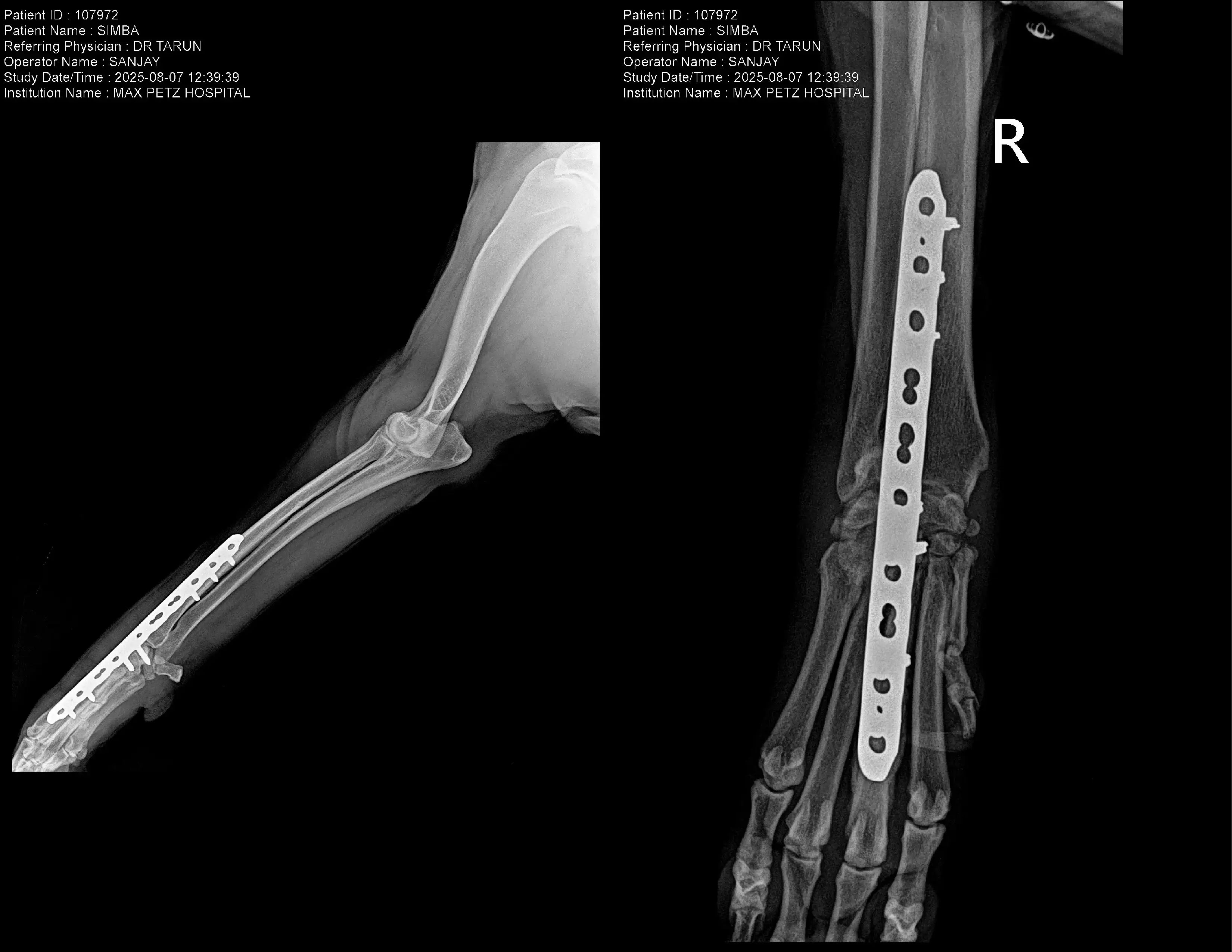
Signalment and History
SIMBA, a 7-year-old male Golden Retriever (47.0 kg), presented with a chronic carpal problem and acute worsening of lameness on the right forelimb. The owner reported history of more-than-month-old injury to the carpus with persistent non–weight-bearing lameness despite earlier casts and bandages. Clinical exam showed carpus valga on partial weight-bearing and medial deviation of the carpus; medial collateral ligament injury was suspected.
Preoperative Assessment & Diagnostics
Preoperative diagnostics included orthogonal radiographs (requisition 424637 / 424641 / x-ray 362087), CBC, KFT, LFT, ECG, AFAST and TFAST scans. Findings included a chip fracture around the first row of carpals on X-ray. TFAST showed normal contractility with mild aortic regurgitation; AFAST suggested mild hepatic changes and cystitis with crystals/sludge. Bloodwork was within acceptable limits for anesthesia with some values noted in the records.
"MRI + CT + 3D planning for safer surgery."
Indication for Surgery
Because of persistent instability, carpal valgus and suspected ligamentous injury with failure of conservative management, pancarpal arthrodesis was recommended.
Surgical Procedure
On 07 June 2025, a radio-carpal–metacarpal (pancarpal) arthrodesis of the left forelimb was performed using plates and screws under general anesthesia (procedure and OT by Dr. Tarun Nar Singh). Perioperative management included IV catheterization, intraoperative monitoring, and appropriate anesthetic drugs. Postop closure included routine layered suturing; staples/sutures planned for removal around 7 days.
Immediate Postoperative Care
Simba received IV antibiotics and supportive injections (CT 550 mg, Clindamycin 150 mg, Rantac, Tribvet, Melonex). SC injections were continued for 2 days, then transitioned to oral medications starting 2–3 days post-op (Bioclan 300 mg, Pantocid 20 mg, Firotail 227 mg, Dutrek for 3 months, Merical Briskit, Chymoral Forte). Strict E-collar use and restricted activity were advised. Dressing change every alternate day; suture/staple removal after 7 days. Owners instructed to avoid licking/chewing and restrict stairs/jumping.
Post-Op Progress & Inpatient Care
Simba stayed for brief inpatient monitoring (boarding/nursing charges recorded on 08 Jun 2025). Appetite initially reduced; urine was produced but stool not passed immediately post-op. Weight-bearing was present. Post-op dressing and suture/staple plan and follow-up with Dr. Tarun Nar Singh were arranged.
Discussion
Pancarpal arthrodesis is indicated in severe carpal instability, certain chip fractures, and irreparable ligamentous injury. Arthrodesis with plates and screws provides stable fixation and predictable pain relief, but necessitates careful perioperative planning, owner compliance with activity restriction, and frequent postoperative checks to monitor wound healing and implant stability.
Conclusion
This case documents radio-carpo-metacarpal arthrodesis in a large-breed patient with chronic carpal instability and a carpal chip fracture. With appropriate surgical technique, perioperative care, and owner compliance, arthrodesis offers a reliable option to restore limb function and reduce chronic pain.
Treatment Timeline
25 May 2025
Initial Presentation / Chronic Problem
More-than-month-old carpal injury with non-weight-bearing lameness despite casts/bandage. Carpus valga and medial deviation noted; suspected medial collateral ligament injury. Advised surgical intervention (pancarpal arthrodesis).
06 Jun 2025
Pre-op Diagnostics
Pre-op workup: x-rays (chip fracture in carpus), CBC, KFT, LFT, ECG, AFAST and TFAST scans performed to assess anesthetic risk and local pathology.
07 Jun 2025
Surgery: Pancarpal Arthrodesis
Radio-carpometacarpal arthrodesis (left forelimb) performed under general anesthesia using plates and screws. Intraoperative team: Dr. Tarun Nar Singh & surgical team.
07–08 Jun 2025
Immediate Post-op & Inpatient Care
Post-op injections (CT 550 mg, Clindamycin 150 mg, Rantac, Tribvet, Melonex) given; monitoring for appetite, urine/stool passage; dressing and E-collar advised. Boarding and nursing charges recorded.
08 Jun 2025 (discharge)
Discharge & Early Home Care
Discharged on oral medications to start after 2–3 days: Bioclan, Pantocid, Firotail, Dutrek, Merical Briskit, Chymoral Forte. E-collar 24/7, dressing changes alternate days, sutures/staples removal after 7 days; review arranged for suture check.
09 Jun 2025 onwards
Follow-Up & Ongoing Recovery
Injectable/IM treatments and monitoring continued; oral meds started as per plan. Further review and rehabilitation planned with surgical team.
Your Pet Deserves Specialist Care
If you're concerned about your pet's health, our team is ready to provide the advanced care and compassion they need.